Evergreen artistes rarely fade away, they are the gifts that keep giving. Since 2020, Omah Lay has been on a sustainable run of delivering unforgettable music. He opened the year with three releases within a four-week span, all of which currently sit in the Top 10 of the Official Nigeria Top 100 chart.
Starting with his feature on Seyi Vibez’s “MY HEALER”, the record debuted at No. 38 (because it was available for a day during the tracking week) and attained a new peak at No. 3 in its third week. “MY HEALER” now has 10.26 million on-demand streams (currently No. 4 on streaming) and 175.84 million in radio reach (currently No. 4 on radio). Lekaa Beats’ “ANGELS” with Omah Lay and ODUMODUBLVCK debuted at No. 8 and rose to a new peak of No. 7 in its second week, with 3.5 million on-demand streams and 73 million radio impressions overall.
On February 6th, Omah Lay released “DON’T LOVE ME”, a single off his highly anticipated sophomore album, ‘Clarity of Mind’. “DON’T LOVE ME” debuted at No. 6 on its first week of release with 1.83 million on-demand streams (No. 6 on streaming) and 43.1 million in radio reach (No. 9 on radio).
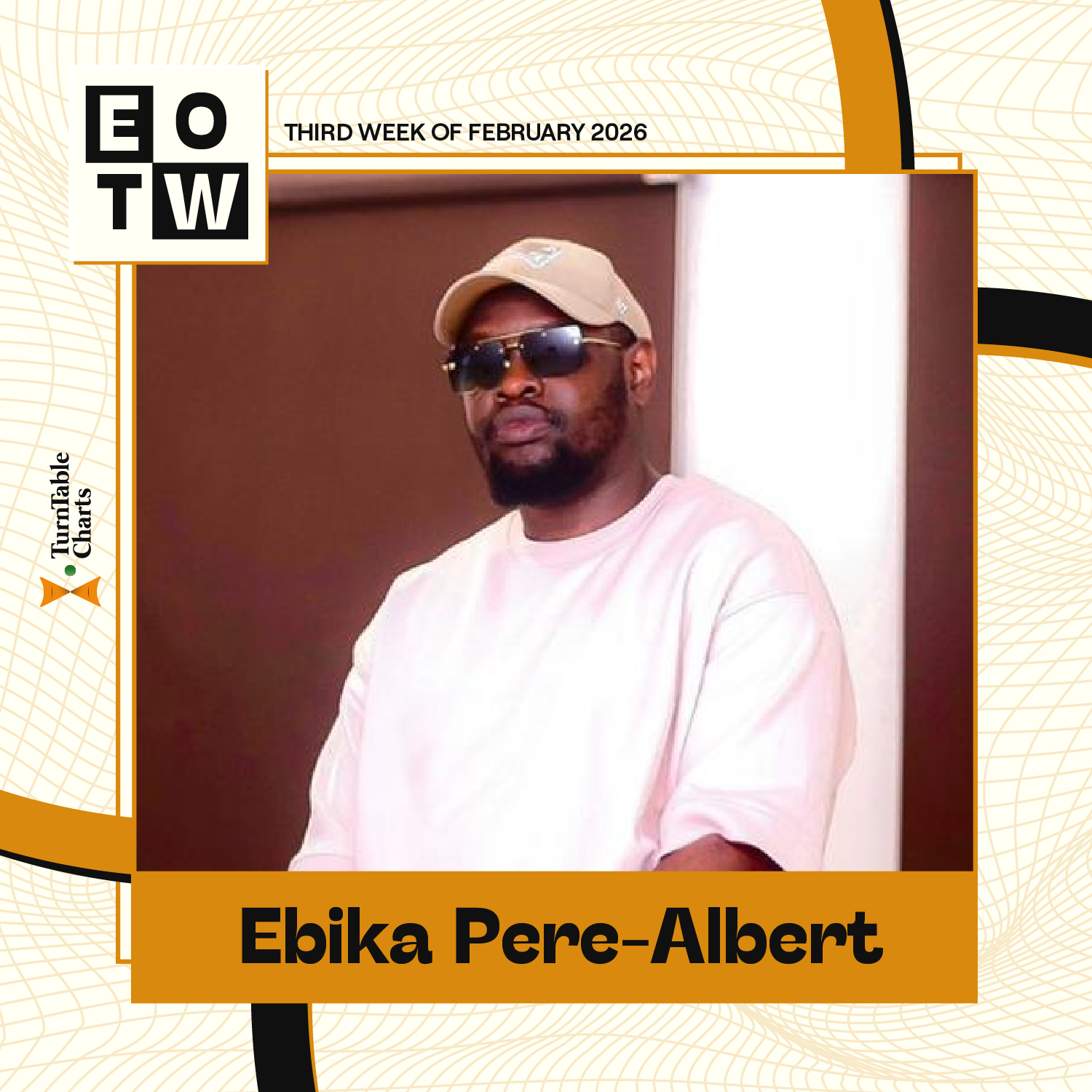
These three concurrent Top 10 entries by the act this week have earned his manager, Ebika Pere-Albert, the Executive of the Week title.
While in talks with TurnTable, Ebika Pere-Albert discusses Omah Lay’s approach to music, the intent behind every release, his managerial role and the team's collaborative process. Additionally, Ebika offers insight into the upcoming ‘Clarity of Mind’ project and outlines how executives can best support their artistes for the best possible output.
TTC: Can you introduce yourself to us and walk us through your role in the music industry, particularly your work with Omah Lay?
Ebika: My name is Ebika, I’m a talent manager and A&R. I’ve been working with Omah Lay since 2020 in an official capacity but have had a work relationship since 2019.
TTC: You’re our Executive of the Week following Omah Lay’s remarkable run on the Official Singles Chart—three Top 10 entries within the last four weeks. “MY HEALER” peaked at No. 3, “ANGELS” with Lekaa Beats & ODUMODUBLVCK debuted at No. 8 and has since climbed to No. 7, while the newly released “DON’T LOVE ME” opened at No. 6 in its first week. Sonically, all three records feel distinctly Omah Lay. Were these songs originally intended for him as an artiste?
Ebika: “DON’T LOVE ME” is a song off the forthcoming album ‘Clarity Of Mind’ and serves as a reminder that Omah Lay is not afraid to put his artistic expressions first, regardless of current market narratives. It’s an amazing record just like “ANGELS” which was originally intended for the album as well but the magic with Lekaa Beats set the song on a different path. “MY HEALER” is the record I was most curious about. Omah Lay has always loved Seyi Vibez and they’ve tried to work on several records before. They finally made it happen and I’m glad everyone is loving it.
TTC: What informed the strategy behind releasing three records within such a short window, especially considering Omah Lay isn’t typically known for frequent releases?
Ebika: Sometimes strategy can be the reason some songs never get heard. These are great songs that Omah Lay and the collaborators were happy to put out. Sometimes we need no additional motive than that.
TTC: Of the three songs, which one best reflects what listeners should expect from ‘Clarity of Mind’ in terms of sound, themes, and lyrical direction?
Ebika: I’d say “DON’T LOVE ME”, but the album expresses so much more in terms of theme and lyrics. Omah Lay was very particular about capturing his personal journey over the years in the album, from a pursuit of happiness to a lifestyle to self-awareness.
TTC: From your perspective as a manager, what are some of the key challenges you face in today’s music industry, and how do you navigate or overcome them?
Ebika: The industry today is a moving target. Everything that worked yesterday can fall flat today, and everyone expects the manager to always have answers. Truth is, having the answers is secondary. The real work is in identifying the questions and building from there.
TTC: Given the commercial and critical success of ‘Boy Alone’, do you agree that there’s heightened expectation surrounding ‘Clarity of Mind’? How does the team approach managing that pressure?
Ebika: ‘Boy Alone’ is definitely a classic but I also remember people didn’t take it all in at first. That’s just how it is with music sometimes and I'd rather learn from that than focus on any pressure. Music will always be subjective and listeners will always compare their experiences with it. But my priority is seeing that the music is coming from a genuine place.
TTC: Omah Lay recently earned his first-ever Grammy nomination. As a core member of his team, what did that milestone mean to you personally and professionally?
Ebika: For me, the Grammy nomination was half of a dream come true. African music is an unstoppable wave now and Omah Lay is in the thick of it. It definitely shows us we’re doing something right, so we keep going.
TTC: How do you approach long-term career planning for an artiste like Omah Lay in an era where short-term virality often drives decisions?
Ebika: If there’s one artiste who has proved that time tells everything about great music, it’s Omah. Attention span is at an all-time low these days, and music is being boxed in to compete with comedy, sports and algorithms picking who sees what. However, building the next steps around your artiste’s truths is the only way to navigate and stand out.
TTC: What does success look like for you beyond chart positions and streaming numbers?
Ebika: Fans’ feedback and appreciation of the music is satisfying to see, to be honest. Seeing how the music impacts the audience it’s intended for is definitely up there with the numbers and monetary returns.
TTC: How do you decide when it’s the right time to take creative or commercial risks?
Ebika: Every time is the right time to take risks. The rewards are never assured but with strategic planning and paying attention to resulting feedback, there will surely be progress at some point.
TTC: How much do chart performance and streaming data influence your release strategies, and how do you balance that with creative instinct?
Ebika: I’ve learned that data and creativity are not always good allies. I tend to pay closer attention to creativity because it’s the trigger for the attention and patronage that data is sourced from. So, while certain data informs our approach and strategy, I try not to let it interfere with creativity.
TTC: With Nigeria’s charts now more reflective of real-time consumption, has that changed how you assess performance or momentum?
Ebika: The Nigerian audience has always been the most vocal and most important to me. Music will always be a local product first, so having charts and metrics that gauge music performance is a very welcome development. It definitely changes how we assess impact because now we see actual numbers and the territories behind them.
TTC: When a record underperforms compared to expectations, how does the team recalibrate?
Ebika: There’s always a reaction when a song is not performing well but identifying why it happens is the tricky part. More often than not, it’s an exposure problem and the music isn’t getting seen enough, or it’s competing with the most recent interest of the audience. How that is addressed just points back to the ‘moving target’ I talked about earlier.
TTC: How would you describe Omah Lay’s growth as an artiste since his debut, particularly behind the scenes?
Ebika: Omah has grown a lot. He never wanted to be boxed in from his debut and had to do it at a time when the world was locked up. He’s stuck to his beliefs and forged his career on those terms. Behind the scenes, Omah Lay is still a reserved person but also clearer with what he wants. It helps when your artiste can communicate their intentions, so you aren’t left guessing or assuming. He’s his own man now.
TTC: What aspects of his artistry are still largely unexplored by the public?
Ebika: Omah Lay has enough music to put out EPs every month. But his projects always cover all bases of his creativity and most recent expressions. If there’s anything unexplored by the public, it will surely come out soon enough.
TTC: What has been the most defining moment of your career as a manager so far?
Ebika: My most defining moment was probably seeing ‘Get Layd’ EP become a huge success. It’s my purest memory. Everything picked up from that moment so it’s very pivotal for me.
TTC: How do you handle internal disagreements within the team while keeping the artiste’s best interests front and centre?
Ebika: Sometimes the artiste’s interests are right in the middle of disagreements. It takes patience and a constructive approach to get through it because in the end we already know we all want the same thing.
TTC: What advice would you give to emerging music executives looking to build sustainable careers?
Ebika: My advice to emerging executives will be to learn your artiste. No matter what you already know or what your qualifications are, one template doesn’t fit all. Earn your artiste’s trust, stop chasing the spotlight and focus on results. Growth is assured from there.
TTC: How do you protect an artiste’s mental and creative space while navigating commercial pressure? Is that the theme behind the project titled ‘Clarity of Mind’?
Ebika: Omah Lay always has a personal angle to his music and ‘Clarity Of Mind’ is no different. Commercial pressure might be unavoidable but we do what we can to keep it away. It’s the only way the artistes find room to be human. It’s the only way to protect their mental space.
TTC: What should fans and industry observers pay closer attention to as ‘Clarity of Mind’ approaches release?
Ebika: The music, basically. The music will always be the most important factor and ‘Clarity Of Mind’ has a lot of great music. Fans can definitely look forward to that.
TTC: How do you envision Omah Lay’s place in African music five years from now?
Ebika: Five years from now, Omah’s place as one of African music’s most celebrated voices will be undeniable. We already see the influence of his sound and personality in lots of young artistes these days. It will only get stronger.