2020 vs. 2025 Top 50 Songs: How Much Has Changed?
A lot can happen in a year—and in five years, even more. Time tells many stories, and within Nigeria’s music ecosystem, the charts offer a clear record of how our listening habits, genre preferences, and consumption patterns have evolved over half a decade.
Five years on, the data reflects a shift not just in who dominates the charts, but how music rises, spreads, and sustains itself.
The Decline of Chart Monopolies
One of the most striking changes is the gradual decline of the monopolies once held by legacy and superstar acts. For much of the past decade, it was almost a given that the so-called “Big Three,” “Big Four,” or other established legends would consistently populate the charts. While that status quo hasn’t disappeared entirely, it has been meaningfully disrupted.
In 2025, a growing number of emerging artistes are not only breaking onto the charts but sustaining multi-week—and in some cases multi-month—runs. This shift can be attributed to several factors: increasingly diverse listener tastes, the power of social media discovery (with TikTok playing a central role), and faster audience adoption cycles.
A clear example is Chella, whose March 2025 breakout single “My Darling” marked his first-ever entry on the Official Singles Chart. Debuting at No. 13, the record climbed into the Top 10 the following week, peaking at No. 4 (including No. 2 on streaming and No. 35 on radio). The song went on to spend a week at No. 1 on the Official Nigeria Top 100 before sliding to No. 2 and later No. 10 a month after debut. Chella ultimately finished No. 14 on the 2025 Year-End Chart.
FOLA’s “you” just had a historic 23-week run in the top ten of the official singles chart – only two songs have spent more weeks in that region of the chart in history; Fireboy DML’s “Peru” boosted by the heavyweight remix with Ed Sheeran (30 weeks) and Asake’s “Lonely At The Top” (26 weeks) which is the most successful single ever in history.
While 2020 did introduce promising new voices such as Omah Lay, Olakira, Joeboy, Oxlade, and WurlD, the scale of new-act representation was far smaller than what we see in 2025. This year alone, Fido, Kunmie, FOLA, Smur Lee, Famous Pluto, Ayo Maff, and Chella all placed songs in the Top 50. Fido’s “Joy Is Coming” has emerged as the biggest song of 2025, holding dominance from the first half of the year.
Beyond the mainstream, even independent and underground acts have made high-impact debuts—some securing up to three Top 10 entries in a single year and finally a No. 1 song with “BODY (danz)”, as seen with Mavo and Zaylevelten’s mixtape-cum-album ‘then 1t g0t crazier’ spending multiple weeks in the top ten of the official albums chart, including peaking at No. 4.
Street-Pop’s Rise From Fringe to Fixture
In 2020, Street-Pop was only beginning to command national attention. That year, Bad Boy Timz’s “MJ” featuring Mayorkun was the genre’s lone representative on the Top 50.
Fast-forward to 2025, and the difference is stark. Eleven Street-Pop records appeared on the Year-End Top 50, with artistes like Seyi Vibez, Bella Shmurda, Famous Pluto, and Barry Jhay firmly establishing the genre’s staying power.
Seyi Vibez, in particular, has emerged as one of the era’s most dominant figures. In 2025, he released two projects—Children of Africa and FUJI MOTO—both of which debuted at No. 1 on the Official Top 100 Albums Chart. His dominance extended into the previous year as well, finishing 2024 as No. 1 Streaming Artiste, No. 1 Albums Artiste, No. 1 Apple Music Song (“Different Pattern”), No. 1 Boomplay Artiste, and No. 1 Audiomack Artiste.
Survivors of the Era Shift
Despite the influx of new voices, several established acts have navigated the changing landscape with remarkable consistency. Their releases remain highly anticipated, heavily streamed, and backed by loyal fanbases.
Artistes like Wizkid, Davido, Olamide, Burna Boy, and Rema appear on both the 2020 and 2025 Year-End Top 50 charts. In 2020, Davido’s “FEM” finished at No. 2; five years later, his Omah Lay-assisted “With You” closed 2025 at the same position, alongside three additional entries.
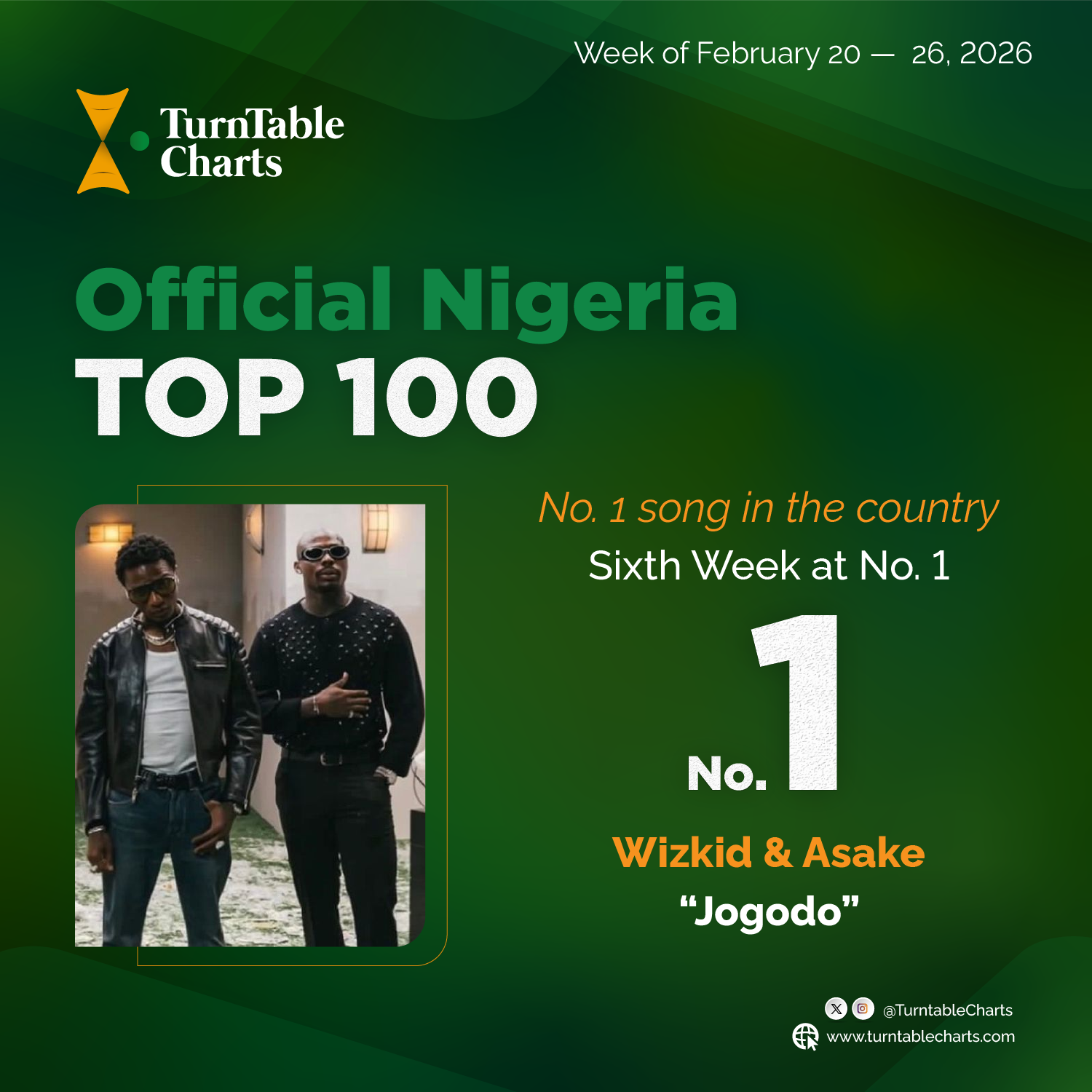
Wizkid’s chart presence has expanded significantly. From a single 2020 entry—DJ Tunez’s “PAMI” at No. 12—he now boasts seven placements in 2025, including “Kese (Dance)” (4), Asake’s “MMS” (13), “Bad Girl” ft. Asake (26), Ayra Starr’s “Gimme Dat” (32), Olamide’s “Kai!” (36), DJ Tunez’s “One Condition” with FOLA (37), and Olamide’s “Billionaire’s Club” with Darkoo (42).
Burna Boy maintained his grip as well, following 2020 entries like “Wonderful,” “Way Too Big,” and “Monsters You Made” with 2025 appearances on Shallipopi’s “Laho II” (3), “Love” (13), “Bundle By Bundle” (27), and “Update” (34). Olamide’s presence spans collaborations across generations, while Rema doubled his Year-End entries from “Beamer (Bad Boys)” in 2020 to “Baby (Is It a Crime)” (9) and “FUN” (29) in 2025.
The common thread remains adaptability—whether through collaborations with younger acts, evolving sonic identities, or deeply entrenched fan communities.
Gender Representation: Progress, But Still Limited
Gender presence remains an area requiring attention. While female artistes continue to appear on the charts, their representation is still far from dominant.
In 2020, Simi, Tems, Teni, Tiwa Savage, Yemi Alade, and Ms Banks all made notable contributions to the Top 50. In 2025, however, only Tiwa Savage, Ayra Starr, Teni, Smur Lee, and Darkoo appear on the Year-End list.
Their placements include Tiwa Savage on Ruger’s “Toma Toma” (21), Ayra Starr’s “Gimme Dat” (32) and “Hot Body” (43), Smur Lee’s breakout “JUJU” ft. ODUMODUBLVCK & Shallipopi (35), Teni’s “Money” (39), and Darkoo’s appearance on Olamide’s “Billionaire’s Club” (42).
While genre preferences may partly explain this imbalance, the need for equitable support systems and sustained visibility for women across genres remains clear.
From Local Consumption to Global Export
Another defining shift is Nigeria’s evolution from primarily local consumption to active music exportation. Nigerian sounds now travel faster and farther, bolstered by global streaming platforms and social media virality.
Songs like CKay’s “Love Nwantiti,” Shallipopi’s “Laho,” Ayra Starr’s “Sability” and “Hot Body,” and Gaise Baba & Lawrence Oyor’s “No Turning Back II” illustrate how rooted, culturally resonant music now scales globally.
By contrast, the 2020 Year-End chart featured significant placements from international acts like Justin Bieber, Roddy Ricch, Drake, Doja Cat, and The Weeknd without the assistance of Nigerian artistes. In 2025, only Daecolm, YG Marley, and Tiakola appear as non-Nigerian contributors – all of them featured acts on songs with Olamide, Seyi Vibez, Young Jonn, Asake and Davido.
Looking Ahead
Ultimately, market growth, streaming culture, social media discovery, emerging talent, and a renewed embrace of indigenous sounds have collectively reshaped Nigerian music. While gaps and growing pains remain, one truth stands out clearly: if this much can change in five years, the next five promise even more transformation.