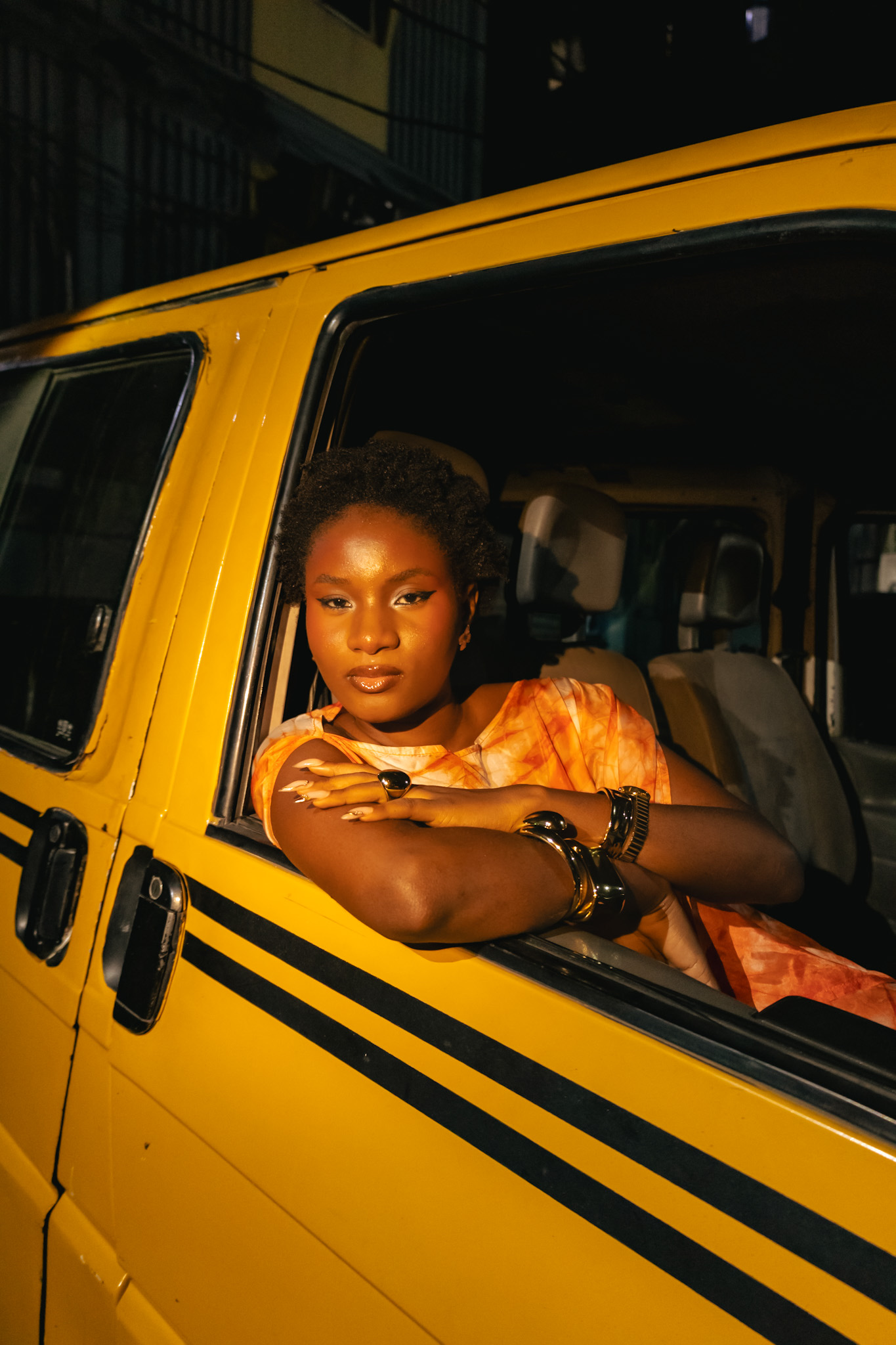
With Her Music, Lodù Breathes Love in Nostalgic Ways
Singing along to Lodù’s songs takes me back many years. Years when those once-in-a-while love songs churn out and we sing from the depths of our hearts, at the top of our voices in those quiet, echoing classrooms. Lodù’s “Olówó Orími” has found its way into a wholesome TikTok trend where I had encountered it. It’s a song that depicts the purest form of love — the unconditional one, love that heals your broken heart and mends your shattering soul.
Laura Ayomide Oduwole started her music many years ago and her originality is one to look forward to as it is going to shift borders, linger in minds, and stay evergreen. Her journey through music began at a very young age, as a violin player, before she chose to pursue it professionally a couple of years ago. We all know how life’s demands take the best of our time, however, Lodù is here again to show us that there is beauty in art and that beauty will always find a way to raise its head again.
Her lyrics depict her lover in the best light and giving Lodù’s songs a spin speaks love to you. Maybe when you understand love in the nostalgic way Lodù does, maybe then, you’d find your “Olówó Orími”.
TTC: Hi Lodù. For people just discovering you today, how would you introduce yourself and the kind of music you make?
Lodù: Hi, I’m Lodù. A singer-songwriter, producer, and businesswoman. I primarily make Afrocentric-Soul music. My artiste name is actually coined from my first name and my father’s name: Laura Oduwole, which became Lodù.
TTC: Listening to your music, there’s this nostalgic feeling to it, almost like the love songs many of us grew up hearing. Was that always the intention for your music, or did that sound just come naturally over time?
Lodù: Growing up, my mom put me on a lot of music by Busola Oke (Eleyele), Shola Allyson and the likes. The OG lover girls. When I first started writing, I mostly wrote ballads in English because I imagined I would grow up to be like Adele. She’s one of my biggest inspirations. But over time, as I kept creating and discovering myself as an artiste, the sound evolved and I started embracing Afro-Soul more intentionally and leaning into my native language and culture. Now, I’m really proud of the journey, finding my own voice, and in a way that reflects both where I come from and who I’ve grown into as an artist.
TTC: Being an independent artiste comes with many twists and turns. What has that journey been like for you so far, and how have you been able to stay focused on your craft through it all?
Lodù: For me, I know that even if I were signed to the biggest label in the industry, every part of the music business has its advantages and its flip sides. Being independent comes with its own challenges, but it also comes with a lot of freedom, and that’s something I value deeply.
We’re also in a time where artistes don’t rely solely on traditional label structures anymore. Many people are building their careers through distribution deals, partnerships, and independent teams that help them grow while still maintaining ownership and creative control which is what I‘ve done with my independent label.
TTC: A lot of listeners are always curious about how songs come to life. For you, what usually inspires a song and how does that moment turn into a finished record?
Lodù: For me, songs usually start from a feeling in the moment. Sometimes I’m writing about things I’ve actually experienced, but other times it’s the complete opposite. I could be writing a beautiful love song while my heart is breaking. That’s happened quite a few times actually. I’m also very involved in the creative process of my music. I co-produce some of my records and handle my own vocal production as well. That gives me the freedom to experiment with layers, harmonies, and textures until the song feels exactly the way I want it.
TTC: You recently launched your own record company, Émilie Records. How does this milestone make you feel and contribute to your growth?
Lodù: Starting Émilie Records has been one of the best decisions I've ever made for my career. I’ve always known that I was going to be independent because I value ownership of my work a lot and I’ve been very intentional about avoiding exploitation, especially as someone who is business-oriented myself. However, I also believe in partnerships, which is why Émilie Records started. Along the way, we’ve been able to partner with other companies from Distribution to PR agencies, Marketing, Legal etc, and that gives me leverage and allows me to build a team around me rather than trying to do everything completely alone or being in a situation where I don’t have right control over my work.
If the right partnership comes along, I’m always open to it. In this day and age, artists can really take initiative and build something of their own. I pride myself on being a go-getter, and we’ve seen many artists do it independently.
TTC: Your sound is very connected to your roots. With how vibrant the Nigerian movie industry is today, have you ever thought about making music for films or soundtracks someday?
Lodù: Definitely. Every time I write a song, sync is always somewhere at the back of my mind. I often think about how the music could live in film or television, whether someone might want to license it and how well it could fit certain themes or emotions in a story. Because of that, I’m usually quite intentional with my lyrics and the overall mood of the record so it can translate well visually.
And it’s not just limited to the Nigerian film industry. Of course, I would love to work within the Nigerian space, but I’m also thinking globally across the US, the UK, and other international markets where music and film intersect.
Interestingly, I’ve actually been working on a project related to that space. It’s something we’ve spent over six months writing, producing, and recording, and we’ve just recently wrapped it up. I’m really excited about it, but I’ll be able to share more details once everything is fully finalized.
So yes, I’m very open to sync opportunities.
TTC: I really enjoyed “Olówó Orími” — it was actually the first song of yours I heard. How did that record come together and what was going through your mind when you made it?
Lodù: “Olówó Orími” is actually one of those songs where I was writing something while feeling the opposite. At the time, I was going through a breakup so emotionally I wasn’t in the same space. I wrote it futuristically, the kind of love and support I hope to experience when love comes again.
Another layer to the song also came from my faith. I’m a strong believer, and during that period I found a lot of comfort in believing that God was my “Olówó Orími”—the one who supports and takes care of me. But when creating the record, I had to translate that feeling into a romantic context, so it could resonate as a love song.
TTC: When you listen to songs like “When Gold Turns to Dust” and “Baby”, there’s a noticeable shift from some of the indigenous tones in your other music. Is that versatility something you intentionally explore, or do you see yourself leaning more toward one direction?
Lodù: Not only do I write for myself, I also write for other people like DJs, producers, artistes, etc. Because of that, you might occasionally hear a contrast between the kind of music I release as my own work and some of the records I appear on or collaborate on.
For example, “When Gold Turns to Dust” wasn’t originally my personal record. It was something I wrote for the producer, so the sound naturally leaned in a slightly different direction from my usual style.
That said, I’m a very versatile artiste and I enjoy exploring different sounds. I’m always open to collaborations and I genuinely enjoy working with other creatives.
TTC: So far, many of your collaborations have been with other independent artistes like yourself. What has that experience been like building with people who are also finding their way in the industry?
Lodù: It’s been great. I feel like we really only have each other at this stage, and there’s something special about growing alongside people who are also finding their path.
Also for me, the most important thing is the quality of the work. If the music is good, why not? Someone being bigger or more established doesn’t automatically mean the music will be better.
TTC: Every artiste has people who inspire their sound in some way. Who would you say has influenced your music the most, and if the chance came today, who would you love to sing with?
Lodù: Definitely Queen Busola Oke, her songwriting and her style really stayed with me.
When it comes to the music business and branding, my models are Tems, Asake and Olamide Baddo. And I look forward to one day collaborating with Asake. I think it would be a very interesting blend of sounds.
TTC: Another thing people notice is that you take your time with your releases and space them out. Is that something you do intentionally to preserve the quality of your music, or is it just how things have unfolded as an indie artiste?
Lodù: In many ways, it hasn’t been by choice, it’s just how things have unfolded along the journey. That said, moving forward, I’m going to do less of that and put out music more consistently.
TTC: It’s International Women’s Month, and as a woman navigating both life and the music industry today, how would you describe that experience in your own words?
Lodù: Of course, there are certain stereotypes and limitations that women face in any industry in fact, but personally, I try not to let that define my journey.
I focus on pushing my work and hustling, regardless of my gender. I believe that if the work is good and the effort is consistent, that speaks for itself, so I approach my career from that perspective rather than letting gender stereotypes limit me.
TTC: Here comes the big question you always hear; what's the future look like for Lodù?
Lodù: Looking ahead, we’d be releasing a lot more projects and performing more shows. Performing live and touring has been one of the most enjoyable parts of my career, and I want to do more of that.
I also have big plans for Émilie Records. My goal is to grow it into a label strong enough to support and possibly sign female artistes in the future, creating a space where I can uplift other talented women in the industry.
Ultimately, I hope to reach a point where I can step back from my own music full-time and be the next Baddo with YBNL, haha.
TTC: Leave some sign-out words for TurnTable’s Discovery Diary
Lodù: Thank you so much to TurnTable’s Discovery Diary for having me and giving me this space to share my journey. I’m grateful to all the listeners discovering my music today, your support means the world. See you in my next record, cheers!