Behind The Scenes: How Asake Turned One Night in London Into ‘M$NEY (Live in London)’
There was always supposed to be a live album. Asake had wanted one as part of the M$NEY era, a way to give fans another experience of an album whose songs were already built for the stage. The challenge was making sure the live version felt like more than a recording of a concert. To achieve this, it meant bringing together Asake, his record label EMPIRE, and Spotify.
The result was ‘M$NEY (Live in London),’ a standalone live album accompanied by a full-length concert film which is a first-of-its-kind collaboration for Spotify globally.
In a conversation with TurnTable, Spotify representatives walked us through how the idea came together, the preparation behind the performance, the process of capturing it, its reception, and what the project could mean for the future of Nigerian music.
For Kevin Boateng, who works across artist and label partnerships at Spotify UK & Ireland, that was exactly where the opportunity was. Spotify had supported Asake from the beginning of his journey on the platform, and the London show presented a chance to take that relationship somewhere new.
“Not just support a show, but extend it,” Boateng says.
Jae Chabala, an Artist Marketing Manager at Spotify UK & Ireland, who led the campaign from the platform's side, saw the same potential. Asake's audience was already global; what remained was to leave a lasting imprint in memories. So Asake walked onto the stage of Theatre Royal Drury Lane for a one-night-only performance of ‘M$NEY,’ backed by a live orchestra and choir. The theatre, whose history stretches back to 1663, was filled with fans who already had a deep connection to his music. And with the cameras rolling, five unreleased songs were performed for the first time.
How It All Started
The first decision was who should be in the room during this concert and through Spotify's Fans First programme, the team brought some of Asake's biggest London listeners into the theatre. It meant the room wasn't simply filled with industry guests or people who just happened to have access to the show. It was filled with devoted fans who already knew the words, understood his music, and had every reason to be there.
That energy mattered because it was something no amount of post-production could manufacture.
“From selling out the O2 Arena twice since his breakthrough in 2022, it was clear that experiencing him live is something his fans hold deeply,” says Boateng, “So when the conversation around a one-night-only show came up, it felt like a natural fit for Spotify to be involved. What we saw was an opportunity to do something genuinely new.”
The UK-based live music band, Compozers, rebuilt ‘M$NEY’ for the stage with new arrangements, live instrumentation and a choir. Asake performed the album from beginning to end and introduced five previously unreleased songs, “Kings Intro,” “Psycho,” “Ako,” “Ego” and “Bad Boy”, adding a sense of discovery for his listeners that night.
Making The Moment Travel
For Spotify, the challenge was making sure the experience translated beyond the theatre. Every creative decision, from the direction and framing to the pacing, had to serve the experience of someone watching outside London.
The team wanted someone in Lagos or New York to feel what the people in that room felt. That meant approaching the concert film as more than a recording of a performance. It had to be cinematic and intentional, something that could stand on its own and carry the same impact wherever it was watched.
Boateng also points to the response from fans as an indication of what the team had created. Even before Spotify announced the film, fans were already asking where they could watch the full performance. For him, that excitement was not something a marketing campaign could manufacture. It came from an artist who meant something real to his audience.
The Aftermath of the Concert
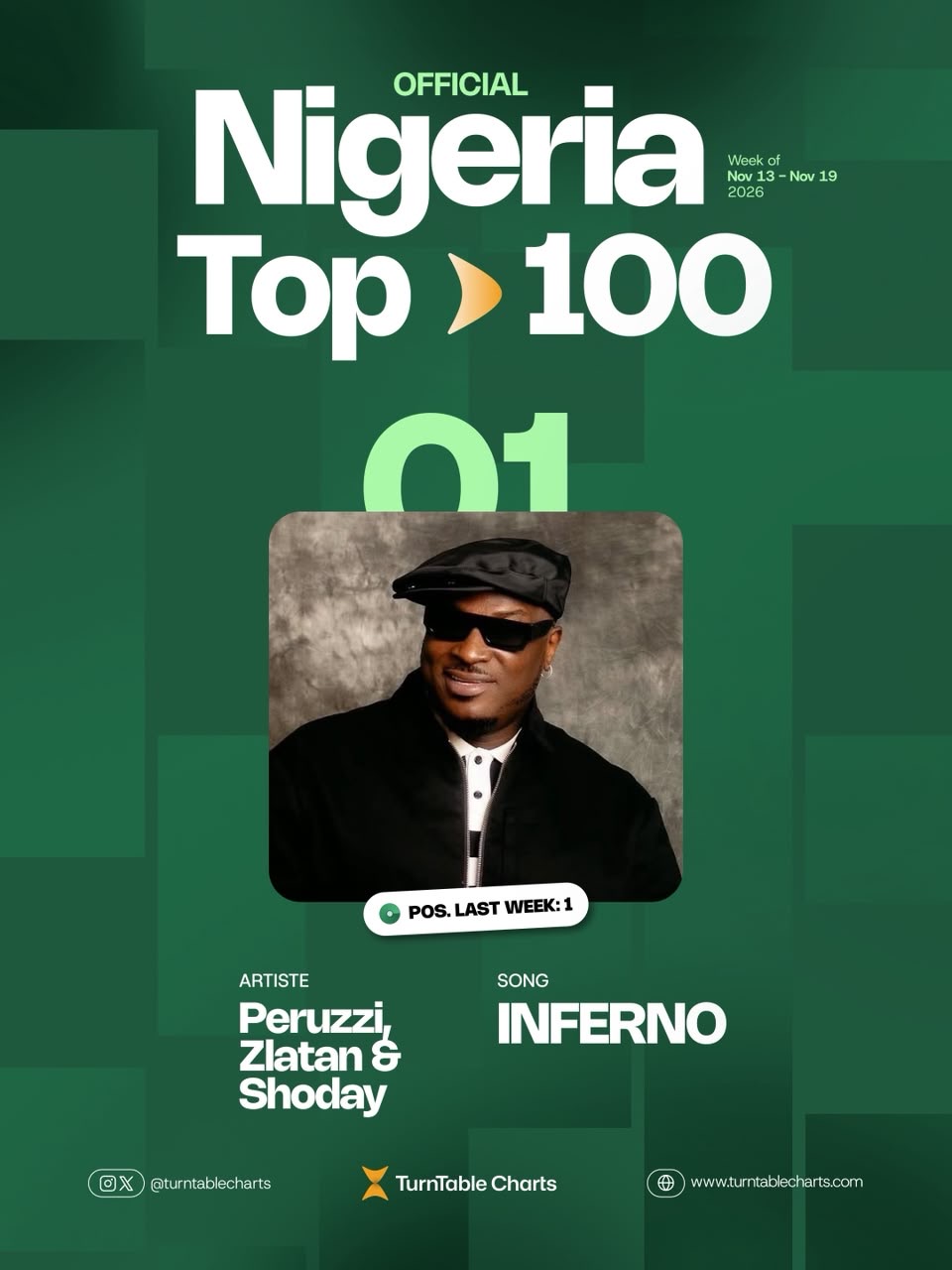
The result was ‘M$NEY (Live in London),’ an 18-track live project that gave the M$NEY project another life on the 21st of June, 2026. It debuted at No. 2 on the Official Top 100 Albums Chart in Nigeria while the original M$NEY remained at No. 1, placing two versions of Asake's project at the top of the chart at the same time. But the Spotify team involved in the project see its significance as extending beyond the chart.
Chabala believes the reception also speaks to an appetite for live albums that the industry has not fully explored. For him, ‘M$NEY (Live in London)’ showed that when a live project receives the same production ambition as a studio album, alongside its own cinematic identity and deliberate rollout, audiences are willing to engage with it as a complete body of work. All 18 tracks entering Spotify's Daily Top Chart in Nigeria on release day offered another indication of that engagement.
The bigger idea is that a major live performance can now become part of an artist's permanent creative catalogue.
Nigerian artists are filling arenas and stadiums across the world, creating performances that can be just as significant as the albums that brought audiences into those rooms. Yet traditionally, the experience has ended when the lights go out. ‘M$NEY (Live in London)’ offers another possibility, showing that a concert can become a live album, and the entire experience can become a cultural moment.
There is something fitting about where Asake chose to do it.
Boateng thinks that contrast was part of what made the moment significant. According to him, “Afrobeats at Theatre Royal Drury Lane felt like a statement about where African music stands right now. It isn’t emerging; it’s arrived.”
What This Means for the Future
Perhaps the most interesting thing about ‘M$NEY (Live in London)’ is that nobody involved seems to view it as an endpoint. For Boateng, the hope is that it represents a new standard for the relationship between Spotify, artists and their fans. One where the platform is not just providing access to music but actively helping artists create moments that reach audiences around the world.
The live album gives fans another perspective on the M$NEY era while offering an early glimpse into the scale of what comes next.
Chabala also hopes the project shows the industry what's possible when African music is approached with the same creative ambition given to artists at the top of the global game. He points to the audience's response as evidence that Nigerian artists have some of the most passionate and culturally engaged fanbases, and that when the experience matches their expectations, those fans are willing to show up across borders.
And for Nigerian music, it could be a blueprint for more successes to come as African artists are increasingly performing on some of the world's biggest stages. The opportunity now is to think about those performances as more than isolated nights and go a step further by documenting, preserving and building bodies of work that can continue to introduce those moments to audiences long after the original crowd has gone home.
That may ultimately be what Asake achieved in London. M$NEY (Live in London), a timeless piece of work that will keep transcending time.
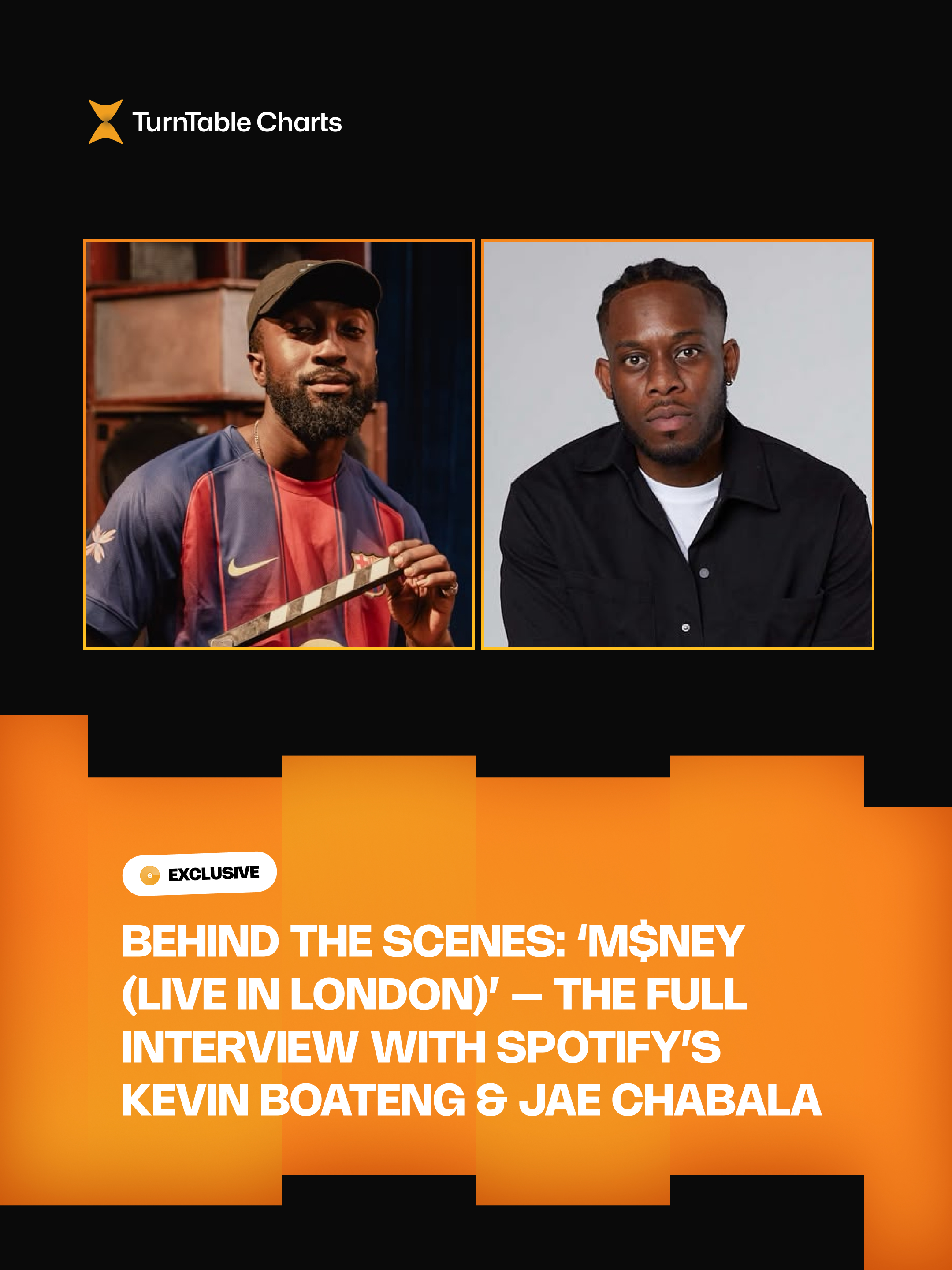
The Full Interview with Spotify’s Kevin Boateng and Jae Chabala
TTC: ‘M$NEY (Live in London)’ has become one of the biggest album releases in the country, debuting at No. 2 on the Official Top 100 Albums chart while the original ‘M$NEY’ remains at No. 1. Spotify played a significant role in promoting and building publicity around the London show — what did that involvement look like, and what opportunity did Spotify see in the live experience?
Kevin Boateng: Part of my role is identifying moments where Spotify can do something genuinely meaningful for an artist at the right point in their journey. This was one of those moments. Asake's live show has always been central to his artistry. From selling out the O2 Arena twice since his breakthrough in 2022, it was clear that experiencing him live is something his fans hold deeply. So when the conversation around a one-night-only show came up, it felt like a natural fit for Spotify to be involved. What we saw was an opportunity to do something genuinely new. Not just support a show, but extend it. Make it mean something beyond the room it happened in. The whole night was captured and launched as Spotify's first ever live album concert film, exclusively on platform. The idea was simple. Some people were in that room, but Asake's fanbase is global. The film meant the moment didn't end when the lights went down.
TTC: What made Asake’s London performance a project Spotify wanted to support, and what did you see in the show that made it particularly significant?
Jae Chabala: It starts with the artist. Asake is one of the defining voices of his generation, someone who has built a passionate fanbase that spans continents, from Lagos to London to New York. That kind of cultural reach is rare and it doesn't happen by accident. But what made this particular project special was the ambition behind it. This wasn't a standard live show. It was a performance of his latest album M$NEY, front to back, for the first time ever, with a live orchestra and choir. Five tracks the world had never heard before, performed in one of London's most historic theatres. That level of vision and artistry is exactly the kind of moment we want to be part of.
And then there's the wider significance. Afrobeats at Theatre Royal Drury Lane, a theatre that's been standing since the 1600s, is historic. That contrast between the music and the setting told its own story about how far African music has travelled and the spaces it now occupies. For us it was about more than a show. It was about documenting a moment in music history and making sure fans everywhere could be part of it.
TTC: What were some of the biggest challenges involved in extending the life of a one-night performance beyond the concert itself, and how did the team approach them?
Jae Chabala: The goal was never just to document a night. It was to make sure the creative vision survived every decision made along the way. From the moment we knew we were filming, the question was simple. How do we make someone watching this in Lagos or New York feel what the people in that room felt. The direction, the framing, the pacing. Every creative call on the night had weight because the fans were going to hold us to the same standard as being there in person. That's the bar you're working to when the artist is operating at the level Asake is, someone who has sold out the O2 Arena twice and has a fanbase that spans multiple continents. For us the goal was always to showcase this to the world in a way that felt cinematic and intentional. Not a recording of a concert but a film in its own right. Something that could travel and land with the same impact wherever it was watched. That's what we were building towards and the response showed we got there.
TTC: What do you think made the London show successful enough to become a project that could live beyond the night itself?
Kevin Boateng: A few things. First, the artist. Asake brings something to a live show that very few artists can. There's an energy and a connection with his audience that's hard to put into words. When you pair that with Theatre Royal Drury Lane, a live orchestra, The Compozers, a choir and five tracks the world had never heard before, you create the conditions for something extra special.
But what made it transcend the night was the fans and that started before anyone had even set foot in the theatre. The show created a storm in London before it happened. Those who had access had access and those who didn't made sure everyone knew about it. Then after the show, before we had even announced a film, fans were already demanding to know where they could watch the full thing. That kind of hunger doesn't come from a marketing campaign. It comes from an artist who means something real to people. And then there's the cultural significance. Afrobeats at Theatre Royal Drury Lane felt like a statement about where African music stands right now. It isn’t emerging; it’s arrived. When a moment carries that weight, people want it to live forever. Our job was just to make sure it could.
TTC: How did working with EMPIRE contribute to Spotify’s approach to the project, and what did the collaboration between both teams make possible?
Kevin Boateng: EMPIRE have been an incredible partner and having them involved elevated the ambition of what we were willing to try. They are one of the foremost global distributors of Afrobeats and have been instrumental in launching some of the biggest artists in the world, from Shaboozey to Asake. That kind of track record and expertise doesn't happen overnight.
This wasn't a situation where Spotify came in with a fully formed idea and asked everyone to execute it. It was a proper collaboration built on a shared belief in Asake and what this moment could be. What that made possible was the trust needed to move at the speed we did. When you're building something of this scale in a limited period of time, you need everyone around the table to be aligned, decisive and willing to problem solve in real time. EMPIRE brought that energy throughout and their knowledge of the artist and his world was invaluable in making sure everything felt authentic. The best partnerships push both sides to do more than they would have done alone. That's exactly what this was.
TTC: What does the success of this project tell you about the potential for Nigerian artists to turn major live performances into bodies of work that live beyond the few hours of a concert?
Jae Chabala: It tells me the appetite has always been there. We just needed someone to prove it at this scale. Asake didn't just perform a concert. He created a body of work. ‘M$NEY Live in London’ is an album in its own right, with its own identity, its own tracklist, its own cultural moment attached to it. The fact that it debuted in the top 10 globally on Spotify's debut charts and all 18 tracks entered the Spotify Daily Top Chart in Nigeria on release day tells you that fans didn't just stream it out of curiosity. They engaged with it as a complete project.
The live album as a format has historically been underserved in this space. What ‘M$NEY Live in London’ showed is that when you treat it with the same ambition and production value as a studio album, when you give it a cinematic identity, a deliberate rollout and the full weight of a platform behind it, it connects. The blueprint is there now. I think we'll see more of this.
TTC: Finally, what do you hope this project represents for the relationship between Nigerian artists, their audiences and streaming platforms?
Kevin Boateng: I hope it represents a new standard for what Spotify can be for artists and their fans. Not just a place to stream music, but a genuine partner in creating moments that matter and making sure those moments reach the world. Asake's fans are the reason this worked. They showed up, they created content, they demanded more and that energy is what turned a one-night show into a global moment. That passion deserves to be met with the same level of ambition from the people around the artist. My job is to sit between what artists are dreaming of and what Spotify can make possible. It's about creating opportunities for artists to take the next step in their journey and push the boundaries of what's possible in this space. ‘M$NEY Live in London’ is what that looks like when everything aligns. It showed that when you back an artist with the right idea at the right moment, you don't just create a campaign, you create a cultural landmark. Nigerian artists have always had the talent and the fanbase to do this at the highest level. This is just the beginning of what that can look like.
Jae Chabala: I hope it shows the industry what's possible when you treat African music with the same creative ambition you'd bring to any artist at the top of the game. The campaign around ‘M$NEY Live in London’ wasn't built on a big budget or a traditional rollout. It was built on understanding the culture, understanding the fanbase and making deliberate creative decisions that reflected both. What excites me most is how the fans responded to the quality of it. People didn't just press play and move on. They watched, they shared, they demanded more. That tells you the audience is ready for this. They don't just want access to the music, they want an experience that feels worthy of the artist they love. For me that's the opportunity. Nigerian artists have some of the most passionate and culturally engaged fanbases in the world. When you build something that meets them at that level, they show up in a way that crosses borders and breaks through in markets you couldn't have predicted. ‘M$NEY Live in London’ proved that. Now the question is who does it next and how much further can we push it.
About Jae Chabala
Jae Chabala is an Artist Marketing Manager at Spotify UK & Ireland, leading end-to-end campaigns for artists across the UK market. Recent campaigns include Asake's M$NEY Live in London (Spotify Live), Central Cee's Can't Rush Greatness, Oasis and Spotify's first UK fashion activation with Skepta's MAINS.
About Kevin Boateng
Kevin Boateng does Artist & Label Partnerships at Spotify UK & Ireland, working across artist development, campaign strategy and cross-functional partnerships to help shape the next generation of music moments on Spotify. Recent work includes ‘Asake's M$NEY Live in London’ and Carnival Sounds Live, Spotify UK's first owned video franchise. His work spans partnerships with artists including Nemzzz, Lily Allen and Odeal, and he leads RADAR UK & IE and Fresh Finds, Spotify UK's emerging artist programmes.