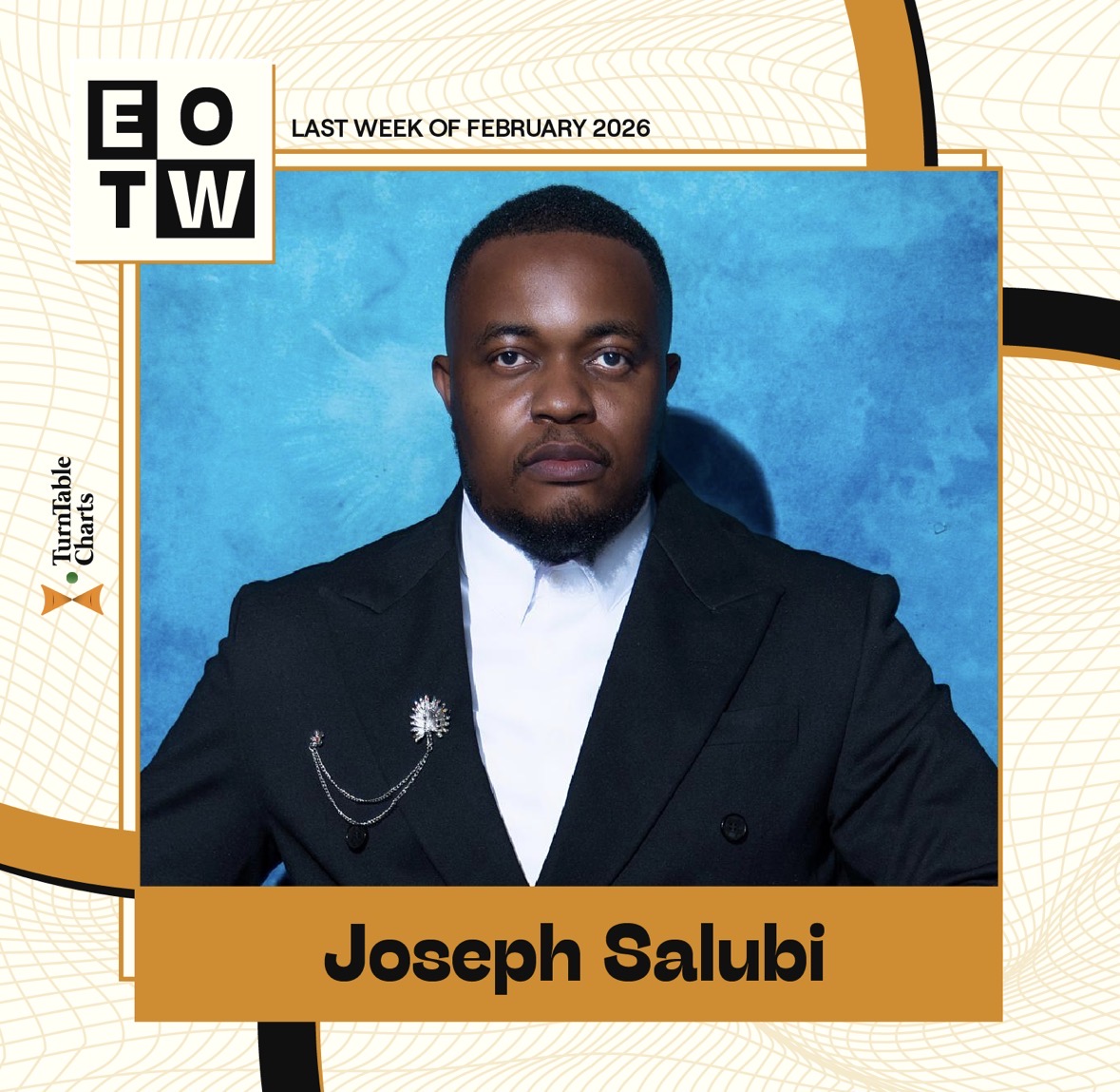
Executive of the Week — Joseph Salubi
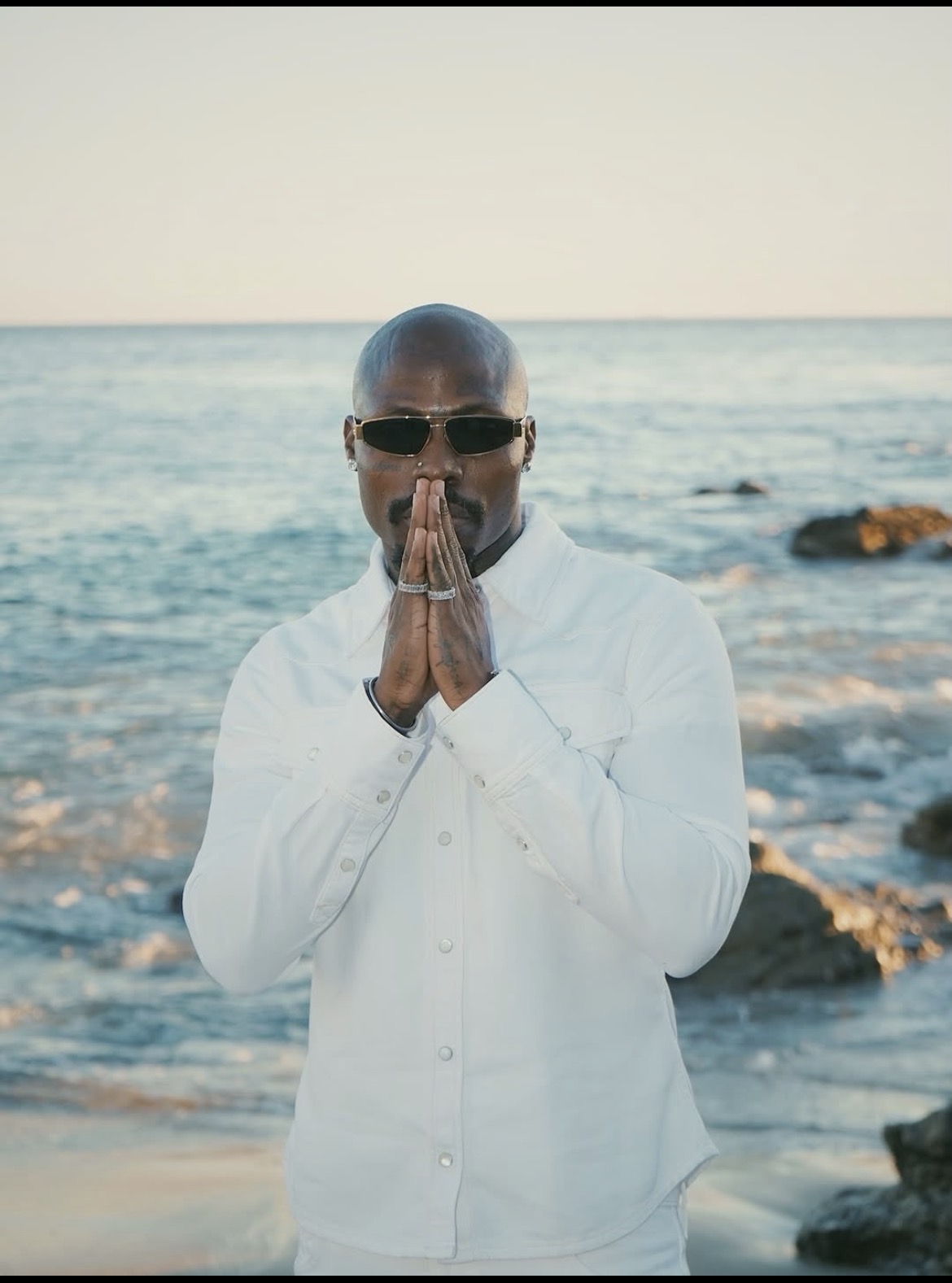
The “Love Nwantiti” crooner, CKay started music as far back as his teenage years, professionally in 2016, and slowly gained recognition in 2019. That year, he released “Love Nwantiti,” which later became popular across airwaves and internationally in 2021 after going viral through a TikTok trend. The global acceptance of “Love Nwantiti” led to significant recognition for CKay’s music and added numerous features and certifications. Right now, “Love Nwantiti” is a Gold-certified release.
Since then, CKay has been delivering notable music. In December, he released the popular and Detty December song of 2025, “Body (danz)” alongside fast-rising star, Mavo. The song has over 33 million on-demand streams and debuted at No. 4 on the Official Nigeria Top 100 chart. Having spent 17 weeks on the chart, “Body (danz)” also still stands in the Top 20 on the singles chart after spending six weeks at No. 1. It is certified 2X Platinum, moving over 200,000 singles units in the country since release.
In January, CKay made a two-track single release titled “BADAMINTON” including the “Body (danz)” and “BADAMINTON” singles. “BADAMINTON” debuted and peaked at No. 11. After four weeks on the chart, the single made a rise from No. 16 to No. 12 on the Official Nigeria Top 100 chart.
To acknowledge these feats, CKay’s manager, Joseph Salubi is TurnTable Charts’ Executive of the Week. In this feature, Joseph Salubi shares his dedication to the music business, his working experience with CKay, and his take on the export of Nigerian music.
TTC: You’ve had a long-standing working relationship with CKay. How has balancing friendship and business shaped your decision-making?
Joseph: Yes, I’ve known CKay as a friend for over a decade, and worked professionally with him for a little over 2 years. CKay has always been an intentional friend, and even more intentional as a business partner. Balancing friendship and business has been mostly seamless, though, like any relationship, it comes with its ups and downs. The key has always been a foundation of mutual respect and trust knowing when to separate the familiarity of friendship from the rigour and discipline required in business. That balance allows us to make clear, strategic decisions while preserving the personal connection that’s driven our long-term collaboration.
TTC: CKay has been making music years before the global expansion of the “Love Nwantiti” moment came. What changed overnight for your team when the record scaled internationally and how did you cope with handling operations?
**Joseph: “**Love Nwantiti” came at a time when I wasn’t yet part of the team, but I was close to CKay as a friend and witnessed the team navigate it firsthand. Overnight, the song scaled internationally and they were sailing through uncharted waters handling new markets, global licensing, viral trends, and operational pressure all at once.
What struck me was how quickly they adapted. The team leaned into the opportunity, making strategic decisions in real time, learning as they went, and ensuring that CKay’s music reached every corner it could without compromising his vision or the integrity of the brand. It was a masterclass in agility, resourcefulness, and creative management under unprecedented global attention.
TTC: You are TurnTable’s Executive of the Week following “BADAMINTON” rise from No. 16 to No. 12 on the Official Nigeria Top 100 chart as well as the sustained Top 20 run of “Body (danz)”. As a two-pack release, were both records always part of the same rollout, and why was there a staggered release window for ”BADAMINTON”?
Joseph: No, both records were not originally planned as part of the same rollout. However, with CKay pioneering a new sound blending Afrobeat with Rock elements and what we call the Mara sound, we felt it was important to give each record its own space to resonate.
“Body (danz)” was designed to dominate the festive season, bringing his signature energy to the clubs and airwaves. “BADAMINTON,” on the other hand, marked a creative shift and needed a staggered release to allow audiences to fully digest the evolution in his sound. The staggered strategy ensured that each record could shine on its own while collectively building momentum for CKay’s trajectory as an artist exploring new sonic territories.
TTC: When planning a release, how central is TikTok as a strategy for promotion given the rise it contributed to CKay’s discography?
Joseph: Social media is a central tool for any release today, not just TikTok. We’re in a digital age where audiences are constantly connected, and attention is everywhere on Instagram, YouTube, Twitter (X), TikTok, and streaming platforms.
For CKay, TikTok has been particularly impactful because it allows music to travel organically and virally, often across borders in ways traditional promotion can’t. But we see it as one piece of a bigger digital ecosystem. Every release is supported by a coordinated strategy across platforms to maximise reach, engagement, and cultural impact, while still keeping the focus on the music itself.
So TikTok matters, yes but it’s the integration across all digital touchpoints that really drives a release’s success.
TTC: The “Body (danz)” feature with Mavo went on to No. 1 on the Official Singles Chart and spent six weeks atop. What were the key events that led to the Mavo collaboration and was the level of commercial success anticipated?
Joseph: Yes, the commercial success of “Body (danz)” was very much anticipated. The song was deliberately crafted for Detty December, with CKay aiming to stake his claim in the clubs with a certified Banger! It was a track that would signal his transition from the Lover Boy era to the Bad Boy era.
The collaboration with Mavo came together organically. At the time, we wanted a rapper who could bring an edgy, dynamic contrast to CKay’s soothing melodies and soft vocals. Mavo’s feature elevated the track, adding a layer of intensity that perfectly complemented the record. It was a strategic move with a mix of careful timing and creative intent that ultimately helped the song rise.
TTC: From your perspective, what are the most important structures an executive must build early to scale an artiste from the beginning of their career to global recognition?
Joseph: From my perspective, the foundation of scaling an artiste globally starts with a competent, committed team that genuinely cares about both the art and the artist. Behind every successful act is a group of people making sacrifices, working tirelessly behind the scenes, long before the spotlight arrives.
Early structures must include proper rights and publishing management, strong brand positioning, financial discipline, and reliable reporting systems. But even the best structures mean nothing without people who are aligned, dedicated, and invested in the artist’s growth. Global recognition isn’t luck, it's the result of invisible work, strong infrastructure, and a team that believes before the world does.
TTC: CKay is widely recognised as one of the artistes who helped globalise Afrobeats. What is your opinion about that?
Joseph: I think it’s completely fair to say that CKay is one of the artists who helped globalise Afrobeats but what makes his role unique is how he did it.
When conversations about Afrobeats going global come up, there’s sometimes a tendency to downplay the records broken by “Love Nwantiti”, dismissing it as “just a TikTok hit,” especially when compared to Afrobeats records powered by major international collaborations. But that perspective misses the bigger picture.
“Love Nwantiti” didn’t just travel, it was emotionally translated. It connected across cultures without needing a Western co-sign. It went viral on TikTok, dominated global Shazam charts, and broke into markets that historically weren’t consuming African music at scale in some cases, not even at all.
What CKay did was push the softer, more vulnerable, melodic side of Afrobeats into the global mainstream. He proved that the genre doesn’t have to be loud or percussive to travel. It can be intimate, heartbreak-driven, emotionally nuanced and still resonate worldwide.
So no, he didn’t start the movement alone. But he absolutely accelerated it in a very digital, very Gen Z way.
TTC: How do you position your artiste’s brand in international markets without losing core audience identity?
Joseph: When you step onto the international stage, it’s no longer just about the artiste but about the culture the artiste represents, and how authentically they carry it. The global audience doesn’t just buy into a person; they buy into a movement. It’s similar to how Bob Marley became synonymous with reggae worldwide. He wasn’t just an artist, he was a cultural ambassador.
That’s how we think about positioning CKay internationally. We don’t dilute his identity to fit global markets. Instead, we elevate it. CKay is positioned as premium Afrobeats, refined, intentional, emotionally resonant but Afrobeats nonetheless. The sound remains rooted in the culture, the storytelling remains authentic, and the identity remains African.
The technique isn’t to “internationalise” by subtraction. It’s to globalise through clarity. When the foundation is culturally strong, the world adjusts to you & not the other way around. Maintaining core audience identity comes from consistency. If your home audience still recognises themselves in the music and the narrative, you’ve preserved the foundation while expanding the reach.
TTC: With Boyfriend Music Ltd, what was the vision behind founding and how does it differ from every typical artiste-driven establishment?
The vision behind Boyfriend Music Ltd was simple but very deliberate. To build a transparent environment where artistes, songwriters, and producers can manage their careers without exploitation.
A lot of artist-driven establishments are built around momentum. They’re reactive. They scale quickly off success, sometimes without putting long-term structure in place. From the beginning, we wanted to build something more sustainable and system-driven.
For us, transparency isn’t a buzzword, it's operational. That means clarity around publishing splits, reporting, ownership structures, contract terms, and revenue flows. Creatives should understand their business, not feel confused by it.
The goal is to create an ecosystem where talent is protected, informed, and positioned for global participation not just short-term wins. So what makes us different isn’t just that we’re artiste-led. It’s that we’re structure-led. We’re building infrastructure around creativity, not just amplifying it.
TTC: In terms of publishing and management, what tangible steps has Boyfriend Music Ltd taken to empower songwriters and producers within your ecosystem?
Joseph: At this stage, Boyfriend Music Ltd is intentionally focused on building depth rather than breadth. Our primary focus right now is the CKay brand ensuring that the publishing, creative direction, rights management, and global positioning around that ecosystem are structured properly and operating at an international standard.
In terms of tangible steps, empowerment begins with infrastructure. That means ensuring clean publishing splits and proper registrations, maintaining accurate metadata and rights administration, prioritising transparency in reporting, and protecting creative ownership and long-term value.
Rather than expanding prematurely, we are deliberate about building internal capacity first with systems, legal frameworks and global partnerships so that when we onboard additional songwriters and producers, we can offer them meaningful support, not just affiliation. We’re intentional about not taking on more than we can genuinely support. In this industry, it’s easy to scale quickly and stretch thin. We’ve chosen the opposite approach. We believe in under-promising and over-delivering.
TTC: We’ve seen distinct phases across CKay’s projects from ‘CKay The First’ to ‘CKay The Second’. Should supporters be on the lookout for ‘CKay The Third’?
Joseph: I wouldn’t say there’s necessarily a “CKay The Third” underway. CKay has always created from a place that’s deeply personal and honest to whatever season of life he’s in. His music isn’t manufactured around a title or a sequel, it's driven by lived experience, and that’s how every creative should approach their craft.
Each project is essentially a diary entry in the CKay archives, a timestamp of who he was, what he felt, and how his sound was evolving at that moment. That authenticity is what his fans connect to. So, if life naturally takes him on a journey that inspires a “CKay The Third,” then absolutely that body of work will come to life. But right now, the focus is simply on making great music.
What I can assure supporters and fans is that there are a lot more BANGERS on the way.
TTC: What policy changes either in neighbouring rights, performance royalties, or data transparency would improve the business environment for African executives?
Joseph: If we’re being honest, the challenge for African music executives isn’t talent. It isn’t global demand. It’s infrastructure.
Neighbouring rights exist in law, but without enforcement, they’re theoretical income. We need stronger cross-border collection agreements between African societies and Europe and North America because African music is global, and the money should flow back just as globally. We also need mandatory digital reporting and compliance for DSPs operating in African markets. If platforms monetise our sound and our audiences, transparency shouldn’t be optional.
And most importantly, we need faster royalty distribution timelines. You cannot build sustainable creative businesses on 18-to-36-month payment cycles. Beyond that, performance royalties must be properly licensed and enforced, and data transparency has to become standardised. Metadata accuracy and reporting access are not luxuries but leverage.
The next phase of Afrobeats’ growth isn’t creative. It’s regulatory and financial. When neighbouring rights are enforced, performance royalties are formalised, and data transparency becomes standard practice, African executives stop being reactive operators and start becoming true global rights managers.
TTC: What does CKay and the team have underway right now? What's next to look forward to?
Joseph: 2026 is shaping up to be a big year for CKay. Fans can look forward to a brand-new album arriving later in the year, a tour announcement coming soon, and a number of exciting surprises we can’t wait to share.